
The Roman Catholic Johann Baptist Church is one of the oldest churches in Cologne.
It was first mentioned in 948 and has been in use since 1080. Parish Church witness.
The church building dates back to different eras. The Romanesque new building from the 13th century was extended in the 14th and 16th centuries by Gothic annexes. During World War II, the church was severely destroyed by bombing attacks (1943/44). After the war, the church was rebuilt in the 1950s by architect Karl Band. He succeeded in connecting the old with the new.
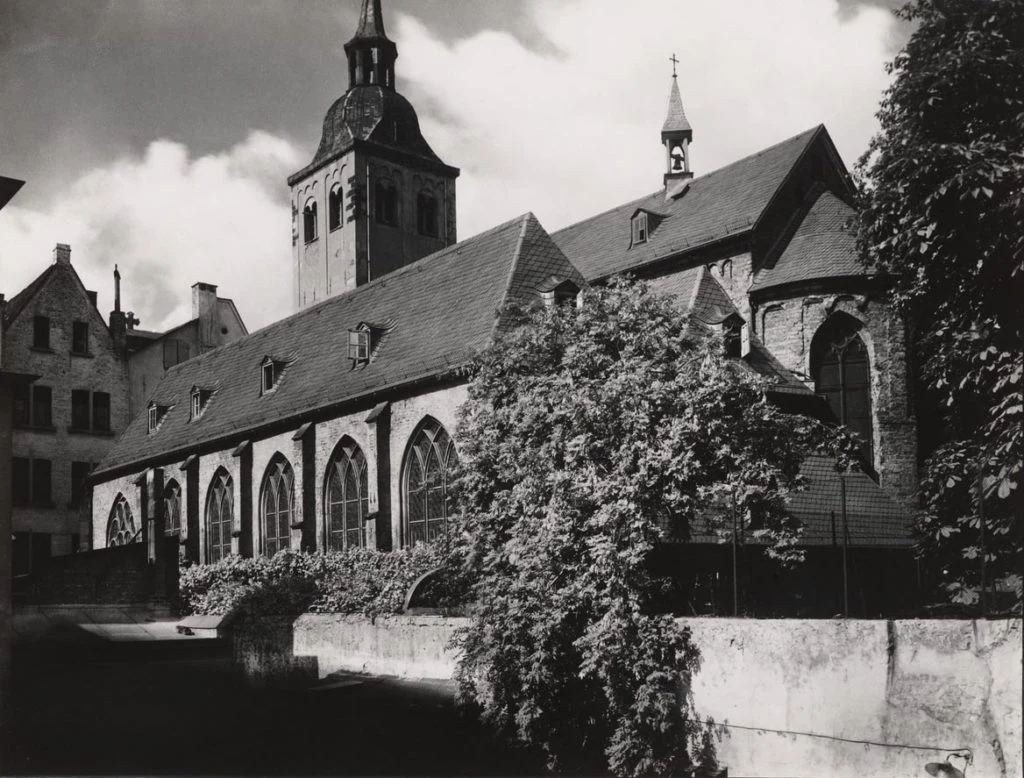
Image credit: Rheinisches Bildarchiv Köln
Sander, August; Cologne as it was, Cologne, 1920/1939, Cologne City Museum (Cologne)Image credit: Rheinisches Bildarchiv Köln · Image source · Image credit
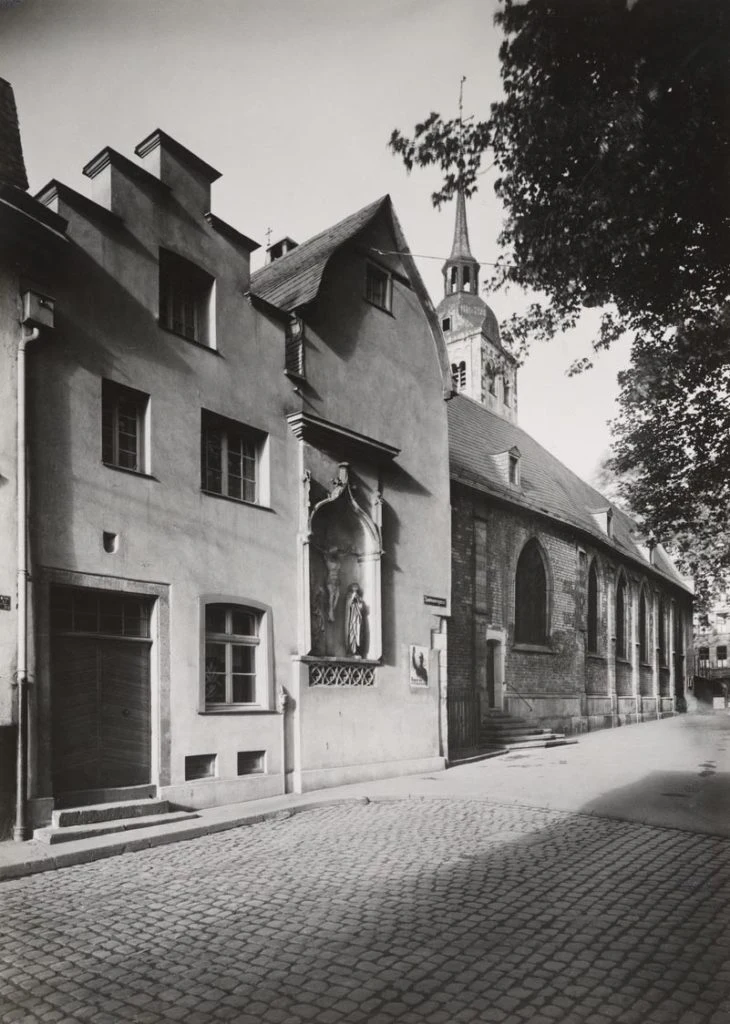
Photo credit: Rheinisches Foto: © Rheinisches Bildarchiv Bildarchiv Köln
Sander, August; Cologne as it was, Cologne, 1920/1939, Cologne City Museum (Cologne)Image credit: Rheinisches Bildarchiv Köln · Image source · Image credit
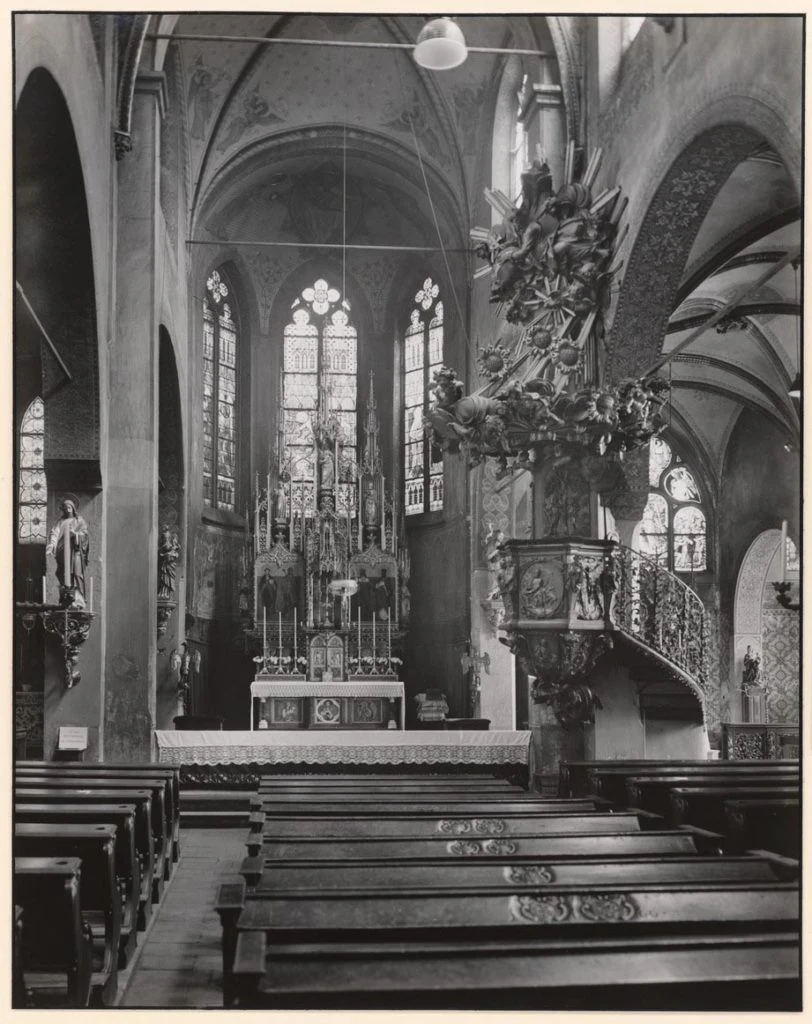
Image credit: Rheinisches Bildarchiv Köln
Sander, August; Cologne as it was, Cologne, 1920/1939, Cologne City Museum (Cologne)Image credit: Rheinisches Bildarchiv Köln · Image source · Image credit
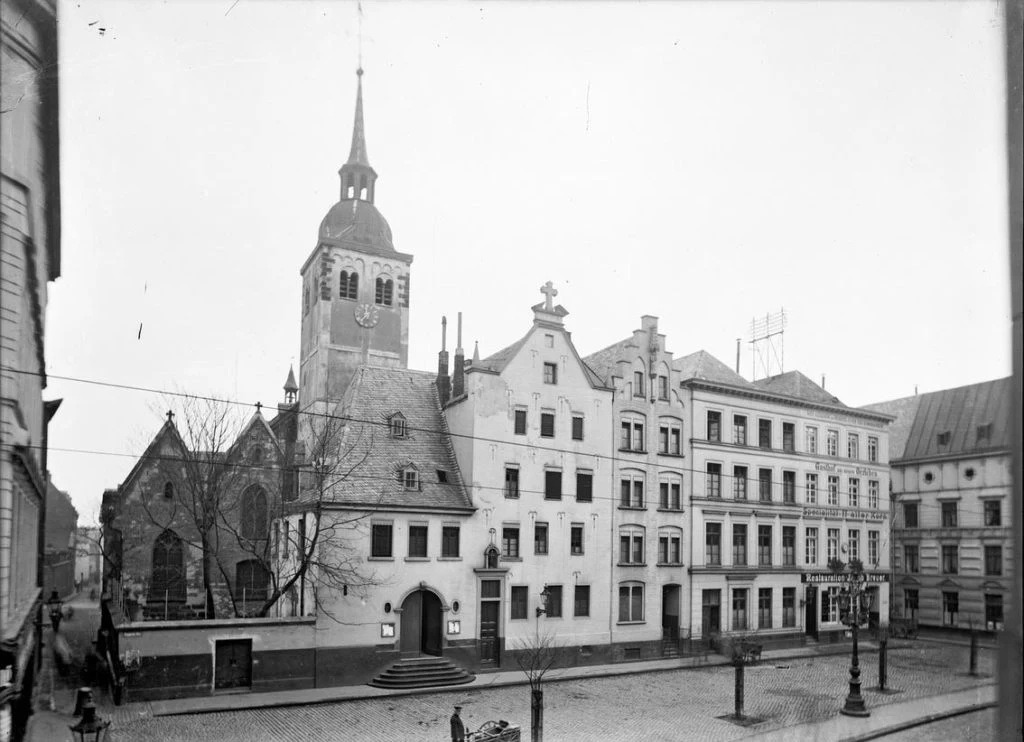
The architectural concept of medieval core and annexes and tower from the modern era received great recognition.
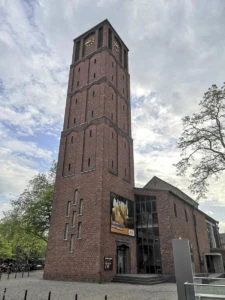
In 2004, the 44-meter-high church tower of St. Johann Baptist came to the press as the “Shale Tower of Cologne”. During the construction work for the north-south light rail in September 2004, the tower tilted 77 cm in the west direction. The day before, a supply shaft had been driven at a depth of 14 m under the church. In order to prevent the collapse of the church tower, it was obliquely supported by steel profiles from the outside. The cavities under the tower were filled with concrete. According to an opinion, the tower could have remained standing without supports, but the church council decided to rebuild. Using hydraulic presses, the tower was raised in controlled 10 mm increments. The repair work cost about one million euros and was taken over by the insurance of the Cologne transport company.
Since 2009 it also serves as a youth pastoral center in the city of Cologne, which has given itself the name “CRUX”.
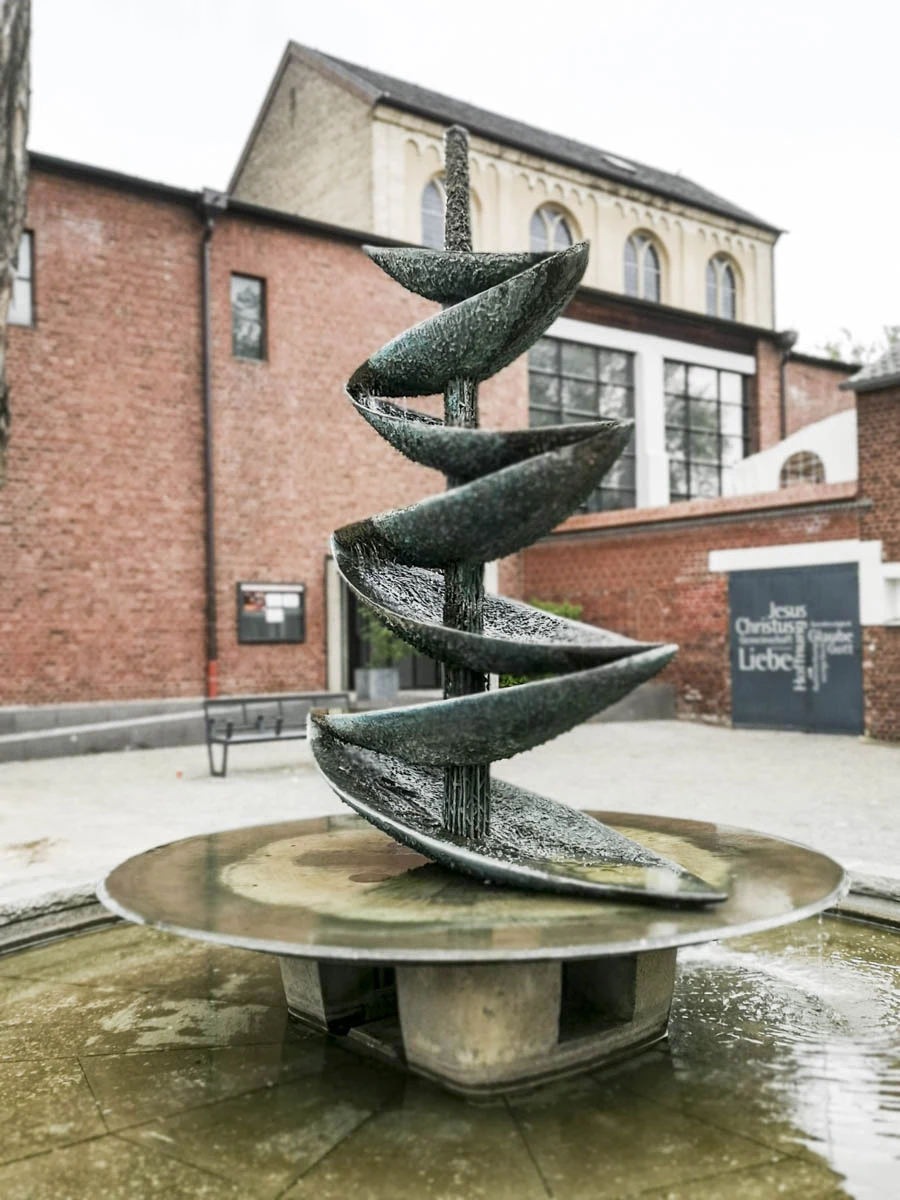
In the foreground of the church is today the
Arnold von Siegen Brunnen
Arnold of Siegen (* around 1500 in Cologne; † 8 January 1579 in Cologne) was a councillor and Mayor in Cologne in the early modern period.[1] He was also Imperial Council and became in the Knighthood collected.
Arnold von Siegen was named twelve times. Mayor elected his hometown. He also repeatedly held the office as Rentmaster and was in the Old University of Cologne, as a temporary agent.
Hermann von Weinsberg, one of the councillors, described “Arnold” in his memorial book as a person with a winning being and praised his “fine eloquence”. These qualities, coupled with a skilful demeanor, made him popular among his fellow councillors and earned him the role of urban negotiator early on. So he was often sent to the imperial court, to imperial and city days as their trustee. In 1526 he served as a representative of Cologne on the Parliament of Speyer Then he signed one for the city. Memorywhich was to mediate influence on the religious contrasts among the imperial cities. He also belonged to one Delegation after Spain who are there, Emperor Charles should inform about the state of church affairs in Germany. On this occasion, Victories reaffirmed the strict Catholic The position of the Cologne Council and thus gained the confidence of the Emperor, who later became the Knights and beat him, and Council appointed. In this distinguished position he remained also under the successor of Charles, King Ferdinand.
Siegen’s pious attitude was also evident in his charity for his parish church to St. John Baptist. For this he took over the costs of an extensive expansion and decoration, as well as the Doping of the parish and a great poor foundation. He gave the church an altar whose wings were Barthel Bruyn had painted. Among the people portrayed by Bruyn, Arnold von Siegen and his wife were also depicted kneeling at the request of the client. These pictures are in the Boisserée Collection in the Old Pinakothek in Munich.
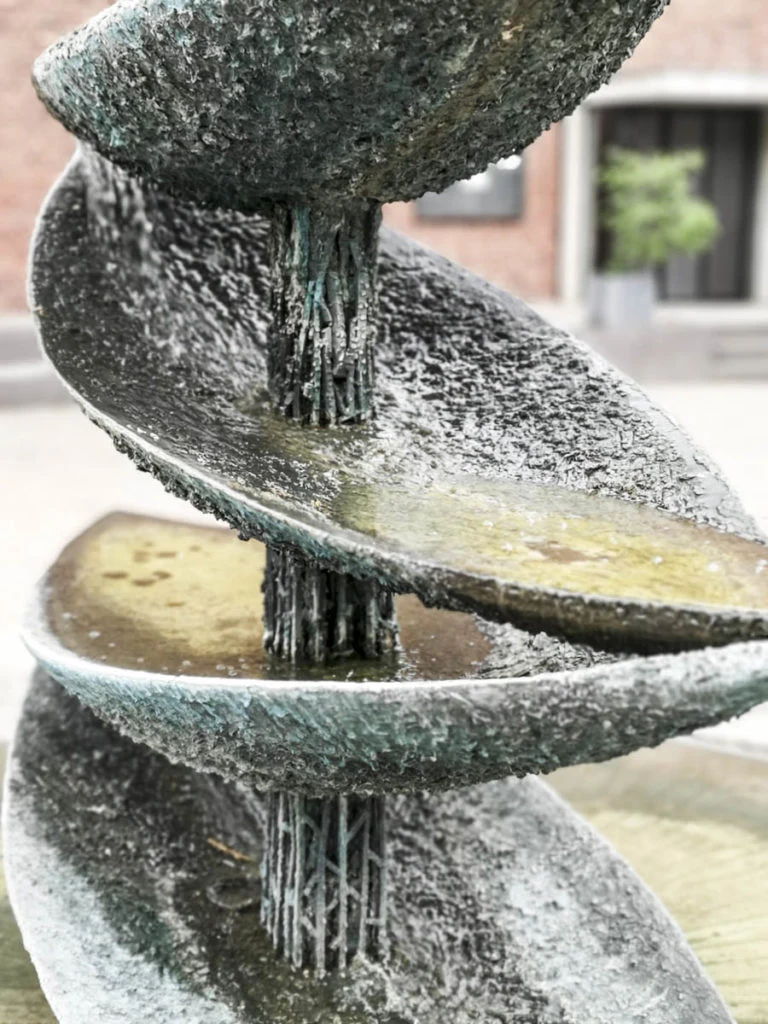
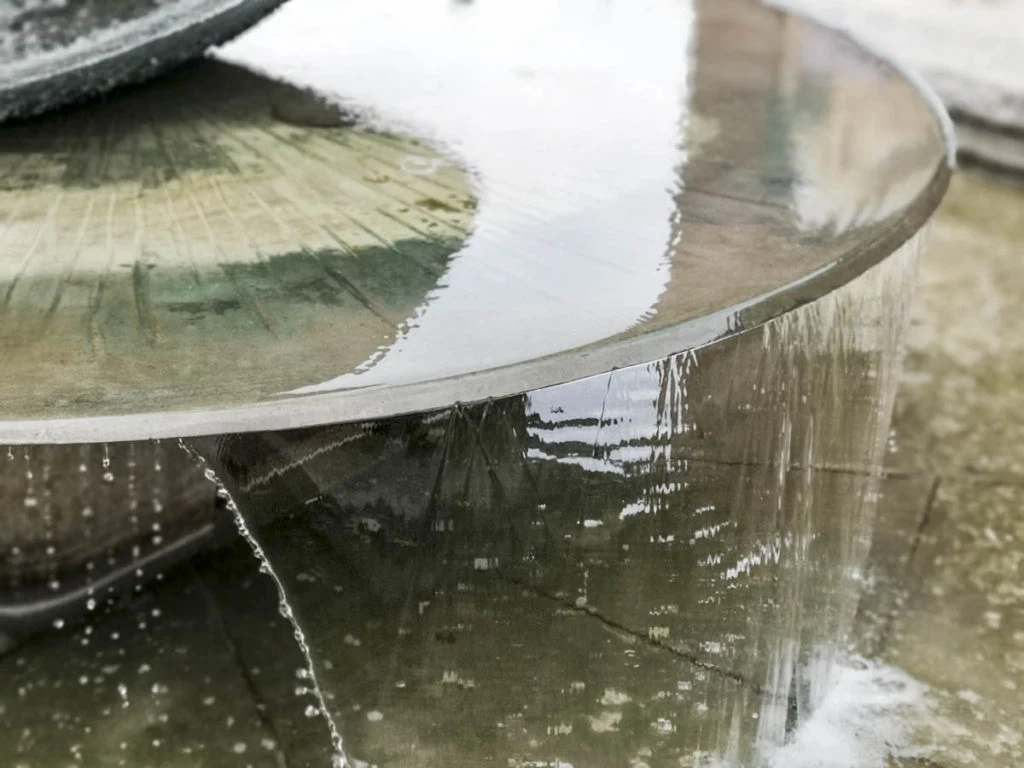
Today, the Cologne mayor is remembered in 1966 by the artist Elisabeth Baumeister-Bühler created Well plant in front of the church “Zint Jan” (St. Johann Baptist), as well as the naming of a small neighbouring street, located behind the church of St. Johan Baptist, to one of the most influential mayors of the 16th century.
Sources:
https://gemeinden.erzbistum-koeln.de/st-severin-koeln/Kirchen/St_Johbap/ https://de.wikipedia.org/wiki/St._Johann_Baptist_(K%C3%B6ln) https://de.wikipedia.org/wiki/Arnold_von_Siegen